
How Our Porcelain Is Made
Old craftsmanship, new ideas
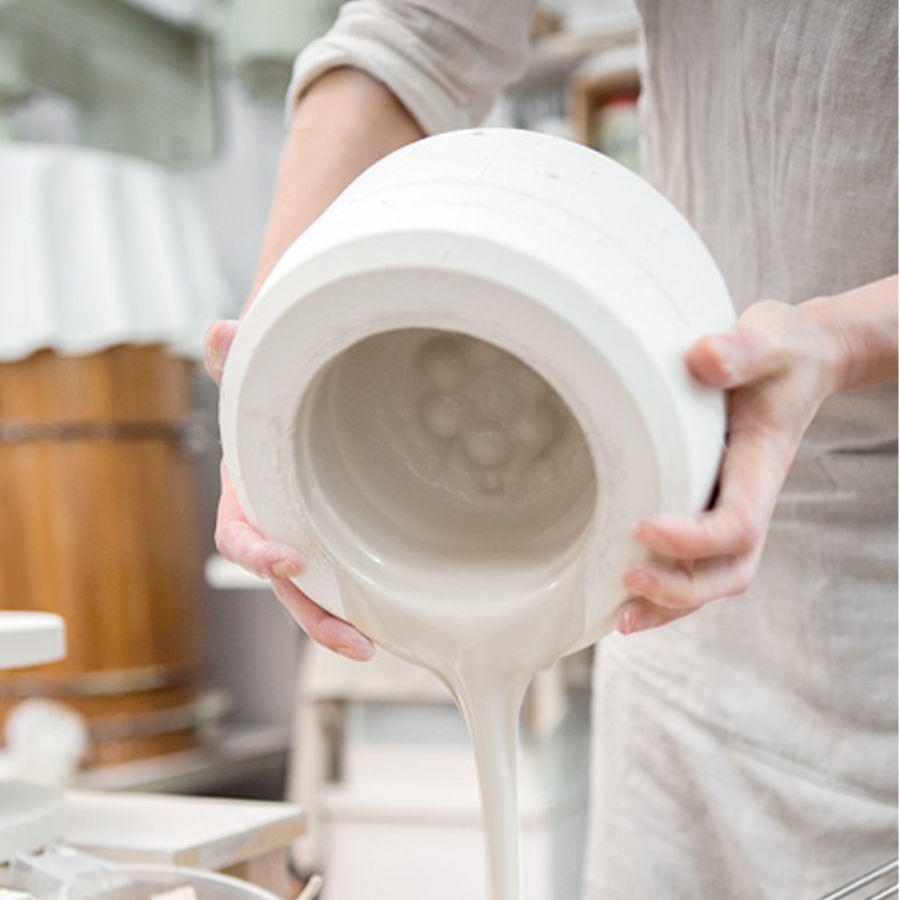
From liquid slip to finished part
Our workshop is the heart of everything. Here, we still handcraft all pieces, entirely without machine assistance.
This is what differentiates them from industrially manufactured mass-produced goods. In classic porcelain manufacturing, there are up to fourteen or more work steps, which are each carried out sequentially and all 100% by hand.
Step by step
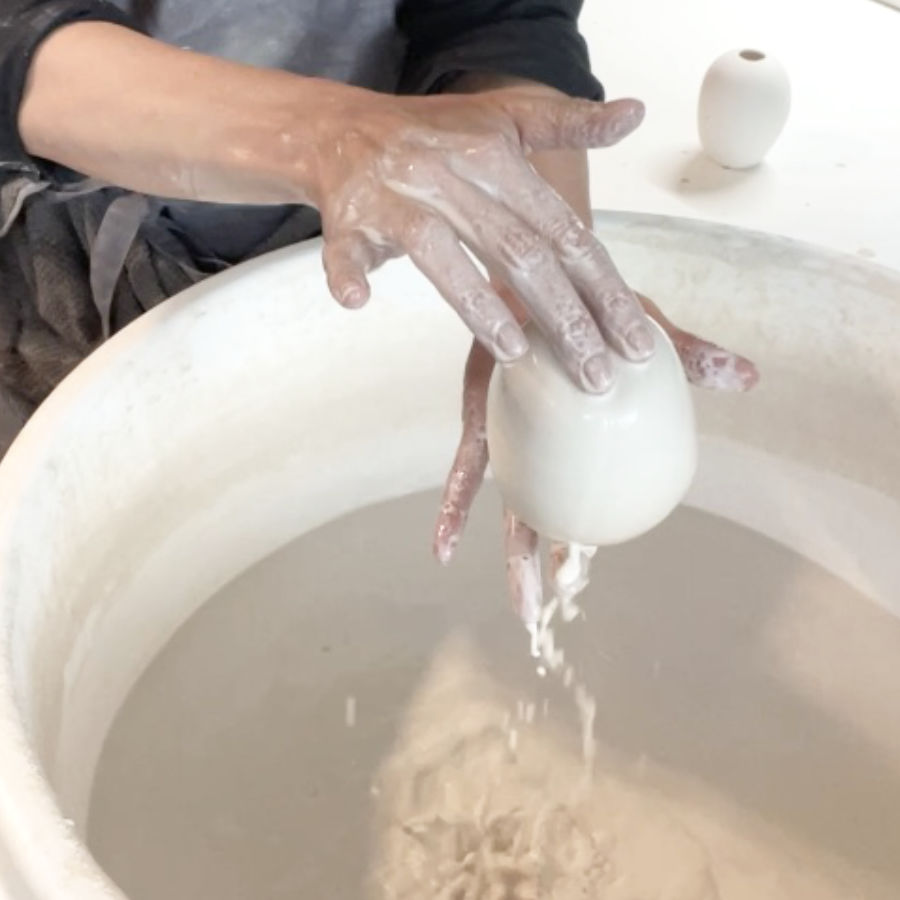
The design is first precisely modeled in plaster and cast.
After the mold has dried, the porcelain mass is poured into the prepared plaster molds, carefully demolded, dried, retouched and pre-fired at approx. 900°. After the first firing, the body has the necessary stability for glazing. The second glaze or smooth firing takes place after glazing at approx. 1300°.
Decors, surfaces and the final touch
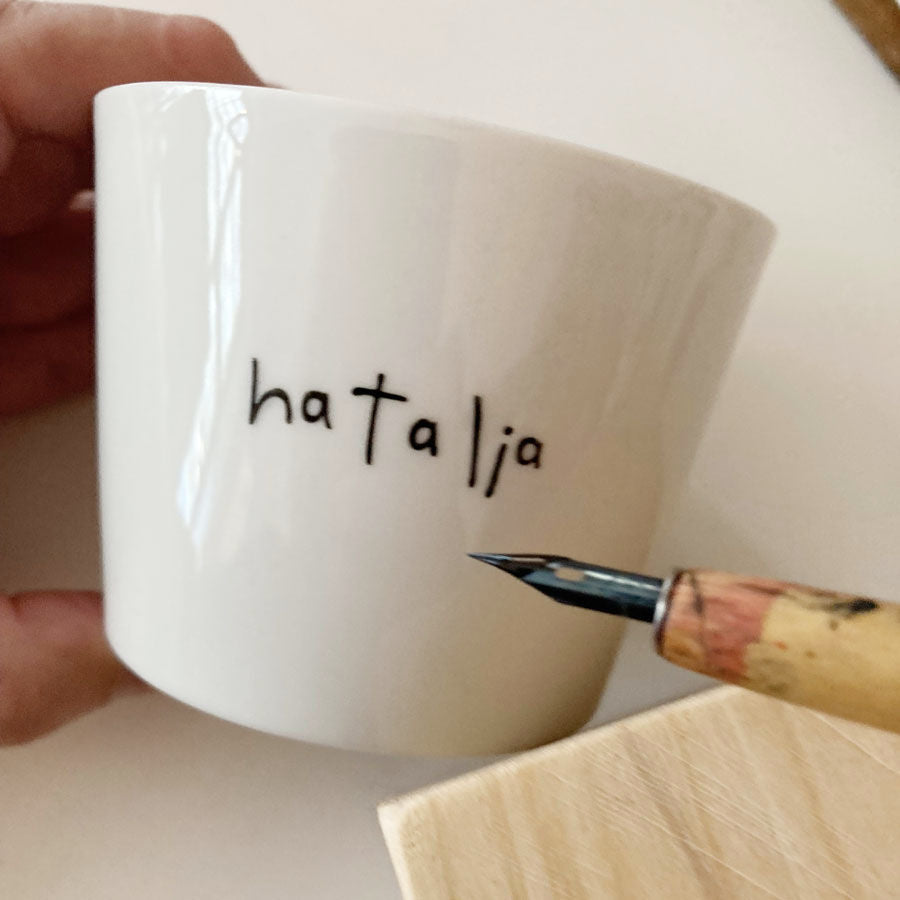
Here, decorations are applied by screen printing or hand painting and fired a third (or more) time in the kiln to fuse them into the transparent glaze. Finally, we hand-sand and polish unglazed surfaces to make the porcelain soft and smooth to the touch in these areas.
Care and everyday usability
The high-temperature firing results in a dense, white-translucent body – stable and durable. All pieces are dishwasher safe, the decorations are firmly baked into the glaze and food-safe.
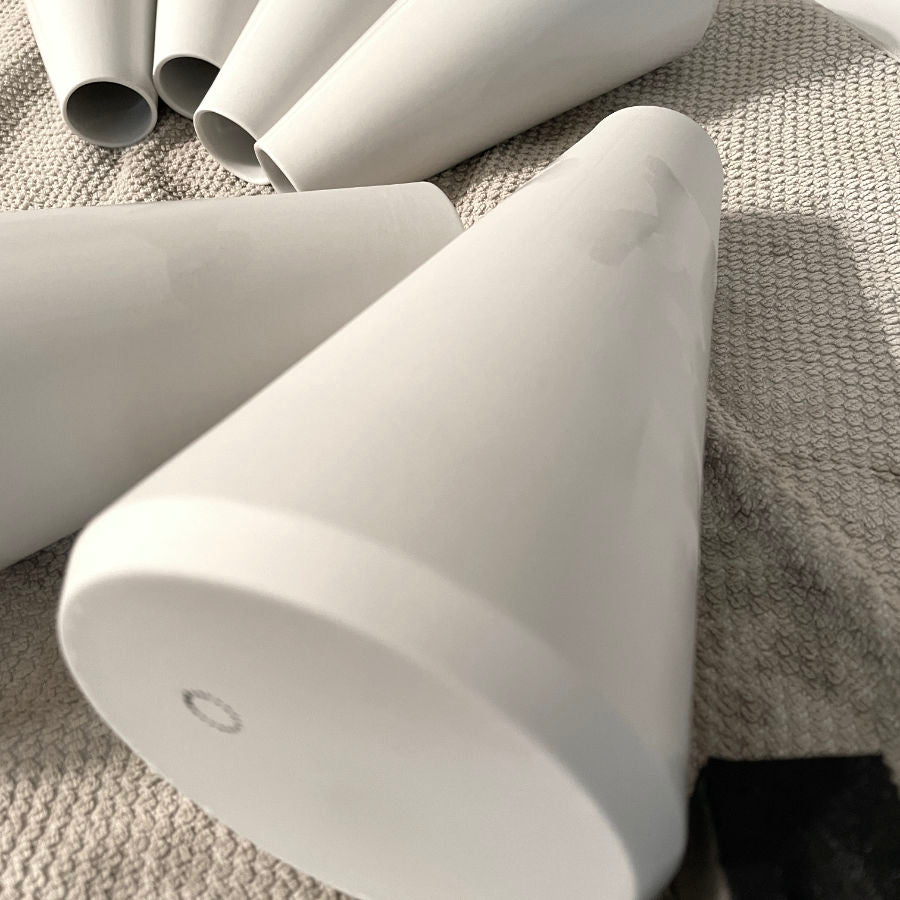
Unglazed exterior surfaces are finely ground and polished, making them velvety soft. For stubborn dirt, a damp magic eraser can help.
FAQ Manufacturing & Care
What does "handmade porcelain" mean at feinesweißes?
In our Berlin workshop, we pour the porcelain slip into molds, retouch each shape, glaze, fire, and sand each piece by hand. This is how true craftsmanship is created – not mass production.
What are the individual steps a piece of porcelain goes through at feinesweißes?
We start with slip casting, demolding, retouching, drying, conducting the bisque firing, glazing, carrying out the final firing, refining with decoration or sanding, and polishing the unglazed surface – every detail is considered and executed.
What makes the surface of our pieces special?
The outer surfaces are intentionally left unglazed in parts, finely ground and polished – the result is a velvety feel and a calm appearance that invites you to use and touch them.
How sustainable is production at feinesweißes?
We deliberately work on a small scale (small series & unique pieces), avoid industrial mass production, and choose environmentally conscious processes whenever possible. Each piece is made in Berlin with consideration for material use and production – this contributes to its longevity and value.
How do I properly care for a fine white garment in everyday use?
In addition to dishwasher-safe use, for unglazed surfaces with heavy soiling, we recommend a damp magic eraser. This will keep the surface matte, pleasant to the touch, and visibly beautiful.
Where is the porcelain made?
Our manufactory is located in Berlin's Prenzlauer Berg – all pieces are produced there in-house under the direction of Katy Jung. This way, we maintain control over material selection, workflow, and quality.
Why is every piece unique or part of a small series?
Because we don't mass-produce: every shape, every décor, every glaze is selected with care. Small series allow for variation – and unique pieces are individual items with character. This way, your choice remains unique.
Are the pieces suitable for everyday use – for example, dishwasher-safe?
Yes. The high-temperature firing creates a dense, non-porous body. Our vessels are dishwasher-safe, and the decorations are permanently fused with the glaze and food-safe.